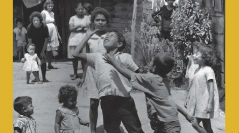
Cartel de la campaña de vacunación del Ministerio de Previsión Social y Salud Pública de Bolivia. Fuente: US National Library of Medicine.
Seven months ago, the Pan-American Health Organization confirmed that Latin America and the Caribbean had become the global epicenter for COVID-19. According to PAHO data, on January 17th the region had 17,421,914 cases, with 550,775 deaths, an increase, respectively, of 5.1% and 3.7% from January 10th.
However, immunization has already begun in countries such as Mexico, Chile, Costa Rica, Argentina and Brazil.
In Brazil, two vaccines were recently approved by the Brazilian Health Regulatory Agency (Anvisa). One of them started to be negotiated in late June 2020, when the Oswaldo Cruz Foundation (Fiocruz) bought the vaccine developed by the University of Oxford with AstraZeneca, a giant pharmaceutical company in the UK, as part of a technology transfer agreement in order to produce it locally. The second vaccine approved was developed by the Butantan Institute, in São Paulo, together with Inovac Biotech, a private Chinese company.
In its 25 years of existence, HCS-Manguinhos have published several articles on vaccines, vaccination campaigns and disease eradication in Latin America. Among the topics covered we can mention the vaccination campaigns and public policies that eradicated polio and smallpox, research for the development of a vaccine against malaria and the international circulation of knowledge that favored the development of vaccines in Brazil.
The international disputes surrounding antiplague serums and vaccines is discussed in the article The establishment of the Manguinhos laboratory, 1894-1902. Matheus Alves da Silva analyzes the 1900 establishment of the Federal Serum Therapy Institute of Manguinhos, Fiocruz, in Rio de Janeiro, focusing on the international circulation of knowledge.
Instituto Soroterápico Federal [Federal Serum Therapy Institute], Manguinhos, Fiocruz, Rio de Janeiro, around 1900. Source: Brasiliana FotográficaIn 1967 the World Health Organization (WHO) launched the global smallpox eradication programme and in 1980 proclaimed the eradication of this disease.The article Control, containment and health education in the smallpox-vaccination campaigns in Mexico in the 1940s, by Claudia Agostoni, analyzes why a uniform and coordinated vaccination method was adopted to counter the outbreaks of this endemic disease, especially in central Mexico and the reasons why smallpox vaccination was considered critical to establish a culture of prevention.
In Smallpox eradication, laboratory visits, and a touch of tourism: travel notes of a Canadian scientist in Brazil, Steven Palmer, Gilberto Hochman, and Danieli Arbex present the travel notes diary of Canadian scientist Robert J. Wilson when he visited Brazil in April 1967 during the Smallpox Eradication Programme run by the WHO. Wilson’s report makes it possible to reflect on the smallpox eradication campaign in Brazil and on the Canada-Brazil cooperation to improve the quality of the smallpox vaccine.
In the first half of 1951, the last case of smallpox was registered in Mexico. The investigation note “The phase after the eradication of smallpox in Mexico, 1952-1977“, by Nydia Aguirre-Bolaños, proposes a research on the the stage after the declaration of the disease eradication in the country.
“Fila de gente en la calle entrando a un edificio del Departamento de Salubridad Pública, Oficina de Vacunación ‘Dr. Balmis’ en la ciudad de México”. Fuente: Agostoni, Claudia. “Médicos, campañas y vacunas la viruela y la cultura de su prevención en México 1870-1952“.
In A battle won: the elimination of poliomyelitis in CubaEnrique Beldarraín Chaple, professor at the Medical University of La Habana, discusses the central role of the state in the elimination of polio in the country and aims to reconstruct the history of the disease in Cuba until the first National Campaign of Vaccination Antipolio (1962) and it also analyzes the continuity of the annual vaccination campaigns has the certification of their elimination (1994).
Breakthroughs towards a malaria vaccine is a testimony by scientist Ruth Nussenzweig, C.V. Starr Professor at New York University School of Medicine about her work to develop an antimalarial vaccine. In her testimony, she traces some of the stages through which her research has passed.
The disputed race for the vaccine against the new coronavirus is the topic explored by Marcos Cueto, scientific editor of HCS-Manguinhos, in the Editor’s note of HCSM recent issue. According to Cueto, this race reveals the importance of technology in the battle against the pandemic, but a look at past epidemic outbreaks have shown that the fight against diseases needs to consider social and institutional factors.
See all articles stories and about vaccination already published in HCSM:










No comments
Trackbacks/Pingbacks